
Haringey Fixers is a not-for-profit charity. Our members (local people) make the decisions, trustees carry them out. We are community-led.
We are a registered charity. As a Charitable Incorporated Organisation (a CIO), we use the CIO ‘association’ model which means our members are in control. A CIO is an incorporated form of charity which is not a limited company or subject to company regulation.
The decisions so far made by members as to our legal structure and constitution are detailed in our governing document.
Only members can make changes to our governing document, normally at our annual general meeting (AGM).
As part of our AGM process members receive a suggested strategy from the Trustees in advance of the AGM. It contains what the Trustees think the members want to do. Previous AGM Agendas contain the proposals Trustees have put to the membership and the members decisions on what to adopt.
Members are given time to request changes to the plan each year, voting on them at the AGM itself. Members have control over the Trustees and can both appoint and dismiss them. They can create resolutions for the members to adopt.
The Trustees AGM report details the delivery of their instructions.
Our history contains a record of events, notably our meetings and significant developments
Our Governance Code (based on that for smaller charities from charitygovernancecode.org), sets out eight principles for striving towards good governance. There are built on the assumption
that a charity is meeting its legal and regulatory responsibilities as a foundation.
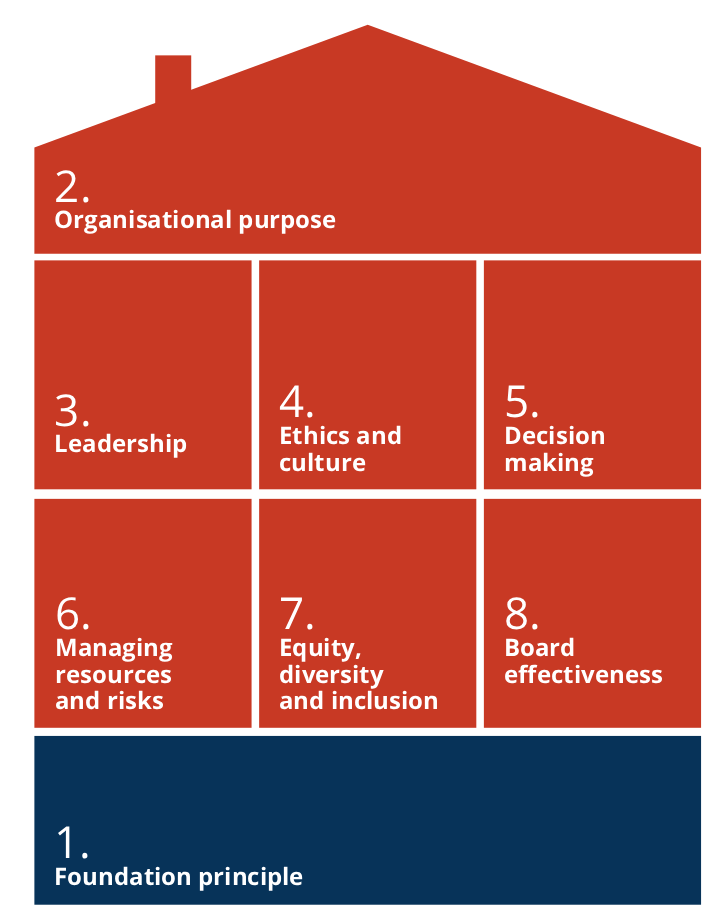
NCVO’s Code of Ethics (August 2022), lays out four principles which aim to provide “an overarching framework for good decision making, judgement and conduct” and reinforce what charities already do.
There is no legal requirement to adhere to any of these documents. Nonetheless we think it important for trustees not just to be aware of the concepts but also to understand how to apply them on a practical level, particularly given governance failings and weaknesses in the charity sector.
The guides are principle based, so share a number of key themes:
Beneficiaries come first
Ultimately, we exist for our beneficiaries – the Governance Code notes that aiding beneficiaries “is at the heart of everything [a] charity does.” While this seems obvious, there are two key ways in which the codes can be practically applied:
Firstly, all trustees should undertake training so they are made aware of the organisation’s objects and how these are carried out for the public benefit.
This might involve sitting in on trustees’ meetings prior to appointment, meeting staff or visiting beneficiaries to see the charity’s work in action.
Trustees should have read the Charity Commission’s publications on trustees’ responsibilities, notably the Trustee Welcome Pack.
Secondly, trustees should regularly review the impact of these approaches to ensure that they are delivering the maximum benefit possible.
A short discussion around impact once per year before each AGM with a more in-depth strategic review every three years should meet these requirements.
Integrity
Each of the codes cite integrity as a key principle of good governance.
Maintaining high levels of personal conduct, acting in the charity’s interests over personal concerns and adhering to the law seem like common sense, but it is important to put structures in place to ensure these standards are upheld at all times.
Formalising an overall code of conduct for trustees, employees and volunteers, supported by policy statements on key areas of legislation is the first step.
Trustees should design internal checks and systems of review by management to put these policies into practice – for example, holding training sessions for employees on whistleblowing procedures and when to apply them.
Transparency
As public benefit entities, charities must not only report clearly and honestly to the public, but be open to scrutiny at all times.
The policies discussed above should be available on request and there should be a strategy in place for regular communication with the key stakeholders. The Digital Code of Practice (For smaller charities, 20Dec 2018 from charitydigitalcode.org) suggests charities are ambitious in the use of technology to disseminate information.
Regular updates to supporters by charities about “how they work, spend their funds and deal with issues and problems” are an effective use of digital technology in promoting transparency.
In practice, it is also important to consult with all stakeholders on proposed changes to the charity’s structure, operations or management. Transparency within an organisation is equally important.
It is best practice for declarations of interest to be made at the beginning of all trustees’ meetings and for an open register of trustees’ interests to be maintained by management and updated annually via a formal written declaration of interests.
Complaints procedures should be transparent, with regular reports about complaints made to the trustees.
Board effectiveness and the balance of trustees’ skills
Trustees are required to “act with reasonable care and skill”.
In order to do so, they must function as an effective team with a suitable balance of skills. The Digital Code of Practice specifically recommends that boards should appoint a trustee with specialism in digital technology as this is increasingly a specialist area. Trustees should formally review their skills mix at least annually in order to identify gaps.
Where such skill gaps do arise, a formal recruitment process is often a useful way to enable the charity to attract those with the relevant skills and also those with an appreciation for the work of the charity. Trustees should do their utmost to reduce any obstacles to becoming a trustee for those with interest and skills – changing the timing and location of meetings, paying expenses and advertising vacant trusteeships more broadly can help to recruit a diverse group of trustees who may be able to bring new ideas into the charity.
Trustees should increase their activity in encouraging diverse candidates to apply and publish their work in this area, enhancing the charity’s transparency.
Leadership, risk and control
Trustees are advised by the Governance Code to devote sufficient time to their role and lead their organisation by example and be at the forefront of developing strategy. Practically, this means being willing to adapt to changing environments.
Regular consideration of whether the charity is serving its beneficiaries in the most effective way may lead to better approaches, for example by employing digital channels to activities and communication. Creating an environment in which staff feel able to have an open dialogue with the trustees and discuss concerns and conflicting viewpoints is also important.
Leadership, however, involves treading the fine line between innovation and caution – the codes are equally clear on the importance of effectively managing risk.
Best practice is for the trustees to conduct a short review of risk at each meeting and oversee a detailed risk assessment at least once a year.
These reviews include our policies in the context of the regulatory landscape. We verfiy the control frameworks applied to uphold those policies.
Involving people in the risk assessment is an effective way of creating links between the day-to-day operational risks and the broader, strategic considerations of the trustees.
The Digital Code of Practice also recommends that the susceptibility of organisations to fraud and cybercrime are included in the risk assessment, including data security as well as digital fraud prevention. We use these risk assessments as a practical method to help create an appropriate digital and operational ethos within a charity. The requirements of the new codes of practice build on what has (or should have been) best practice for many years and interpret it in the context of a rapidly changing environment. The key to successful practical application is for trustees to regularly review their activities against the codes and address any areas where the charity falls short.
Here is an assessment tool.
Chris Setz – Founder, Haringey Fixers March 2022
Version Control – Approval and Review – entire document
| Version No | Approved By | Approval Dates | Main Changes | Review Period |
| 060422a | Chair of Trustees | Dec 22 | Initial draft | Annually |
| 060422a | Chair of Trustees | Dec 23,4,5 |
Contact us if you want to know more.